Six-way practice
11+ vocabulary practice that tests every word six ways
Knowing a definition is not enough for the 11+. After learning a set, your child answers six short rounds on the same words, each practising a skill used in 11+ English and verbal reasoning.
What does “frugal” mean?
Pick an answer. Question 1 of 6, one of each type.
The six rounds
One word, six different questions
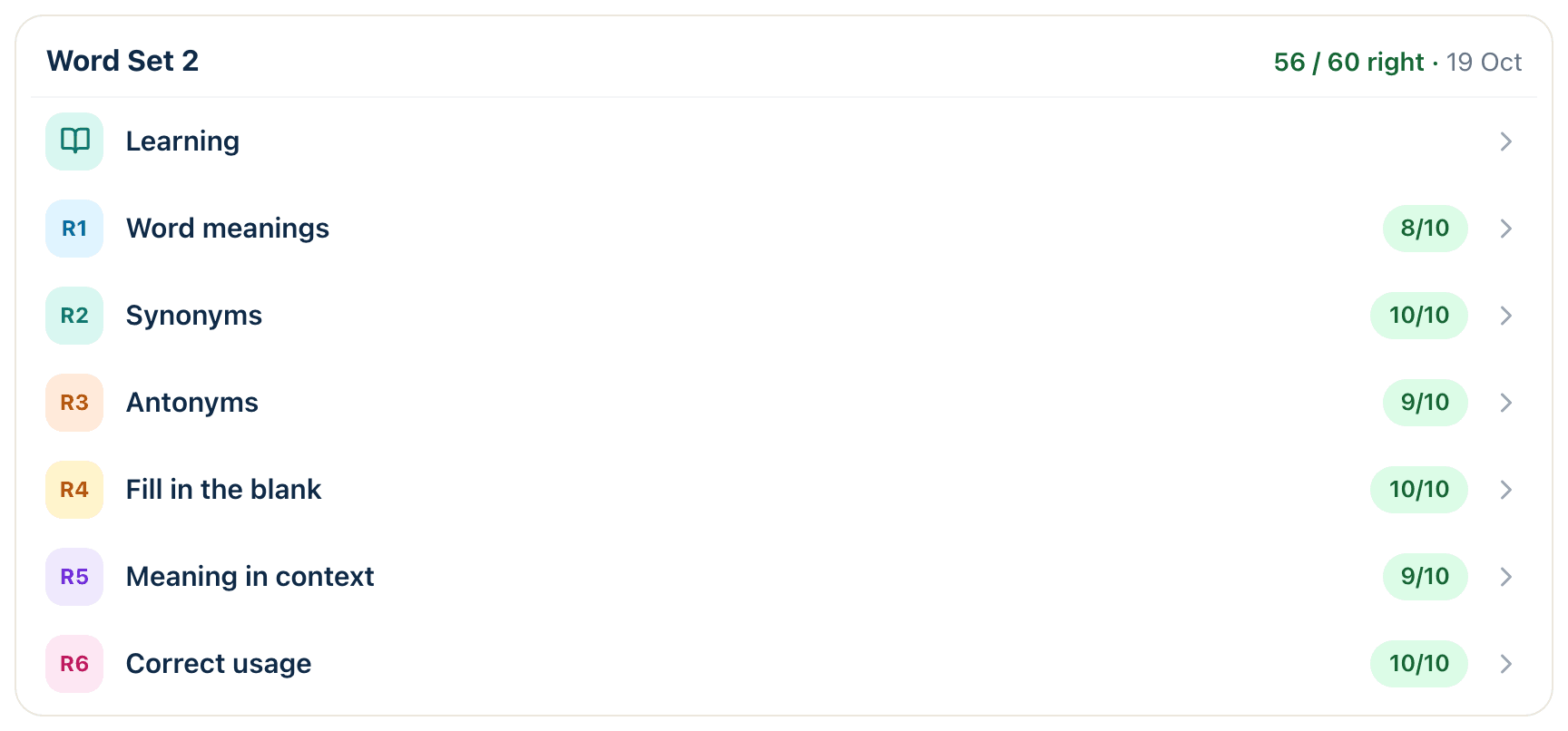
Every word in a set goes through the rounds in this order (a word with no clear opposite skips the antonym round). By the end, your child has met it as a definition, a synonym, an opposite and in real sentences.
Round 1
Meaning
Choosing the right definition from close alternatives.
What does “frugal” mean?
Round 2
Synonym
Matching a word to another with the same meaning, often a harder one.
Which word is a synonym for “diligent”?
Round 3
Antonym
Finding the opposite while avoiding synonyms placed as traps.
What is an antonym of “reluctant”?
Round 4
Fill in the blank
Choosing the word that completes a sentence, as in cloze tests.
The volunteer was known for her ____ nature.
Round 5
Meaning in context
Working out what a word means from the sentence around it.
“…scrutinise the text for hidden meanings.” What does scrutinise mean?
Round 6
Correct usage
Spotting the sentence where the word is used properly.
Which sentence uses “eloquent” correctly?
Every mistake counts
A wrong answer becomes a lesson
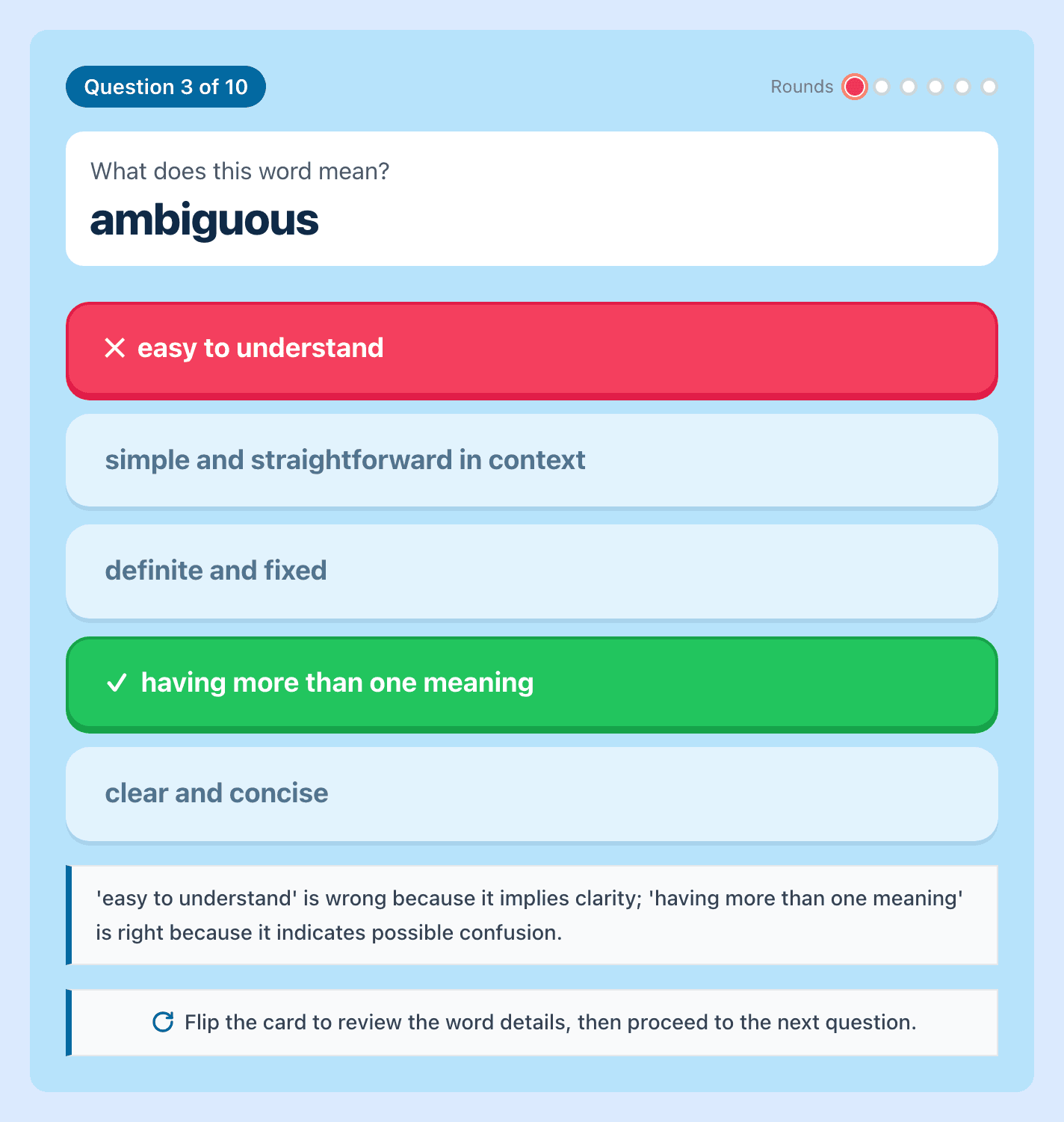
When your child picks the wrong answer, the app shows why it is wrong and why the right answer is right.
- A short explanation for the answer they chose
- They flip the card to review the word before moving on
- The word is tagged as tricky and comes back in later sets
- Round scores appear in My Progress, so you can see how each set went
Before the rounds
Learn first, then practise
Each set starts with interactive flashcards, so your child knows the words before they are tested on them. Practice rounds then check that the learning has stuck.
Questions
Practice questions from parents
What question types are in the 11+ vocabulary practice?
Six: meaning, synonym, antonym, fill in the blank, meaning in context and correct usage. Each word in a set is tested once in each round (words with no clear opposite skip the antonym round), so your child meets it in up to six different ways.
Is this like the real 11+ exam?
These question styles are common in 11+ English and verbal reasoning practice, such as synonyms, antonyms, cloze sentences and meaning in context. The questions are our own, written for our word list; we do not copy any exam board’s papers.
What happens when my child gets an answer wrong?
The app explains why the chosen answer is wrong and why the correct one is right. Your child then flips the card to review the word before moving on, and the word is tagged as tricky so it comes back for review in later sets.
How long is each practice round?
A round has one question for each word in the set, so 10 to 30 questions. A 10-word round usually takes just a few minutes, which makes it easy to fit into a busy day.
Can my child practise for free?
Yes. The free plan covers all 2,000+ words at about one learning session or round a day. Premium removes the daily limit so your child can do as many rounds as they like.
Explore
Other features
- Interactive flashcardsMeaning, examples, synonyms and opposites for every wordLearn more
- Spaced repetitionTricky words come back until they stickLearn more
- Theme WordsWords grouped by meaning, so they stick togetherLearn more
- Root words and prefixesWork out new words from their partsLearn more
- AI BuddyChild-friendly help when a word feels hardLearn more
Start with a free vocabulary check
25 questions, about 5 minutes. See how many 11+ words your child already knows and where to start.